DON’T BE A STRANGER
Artist Bio:
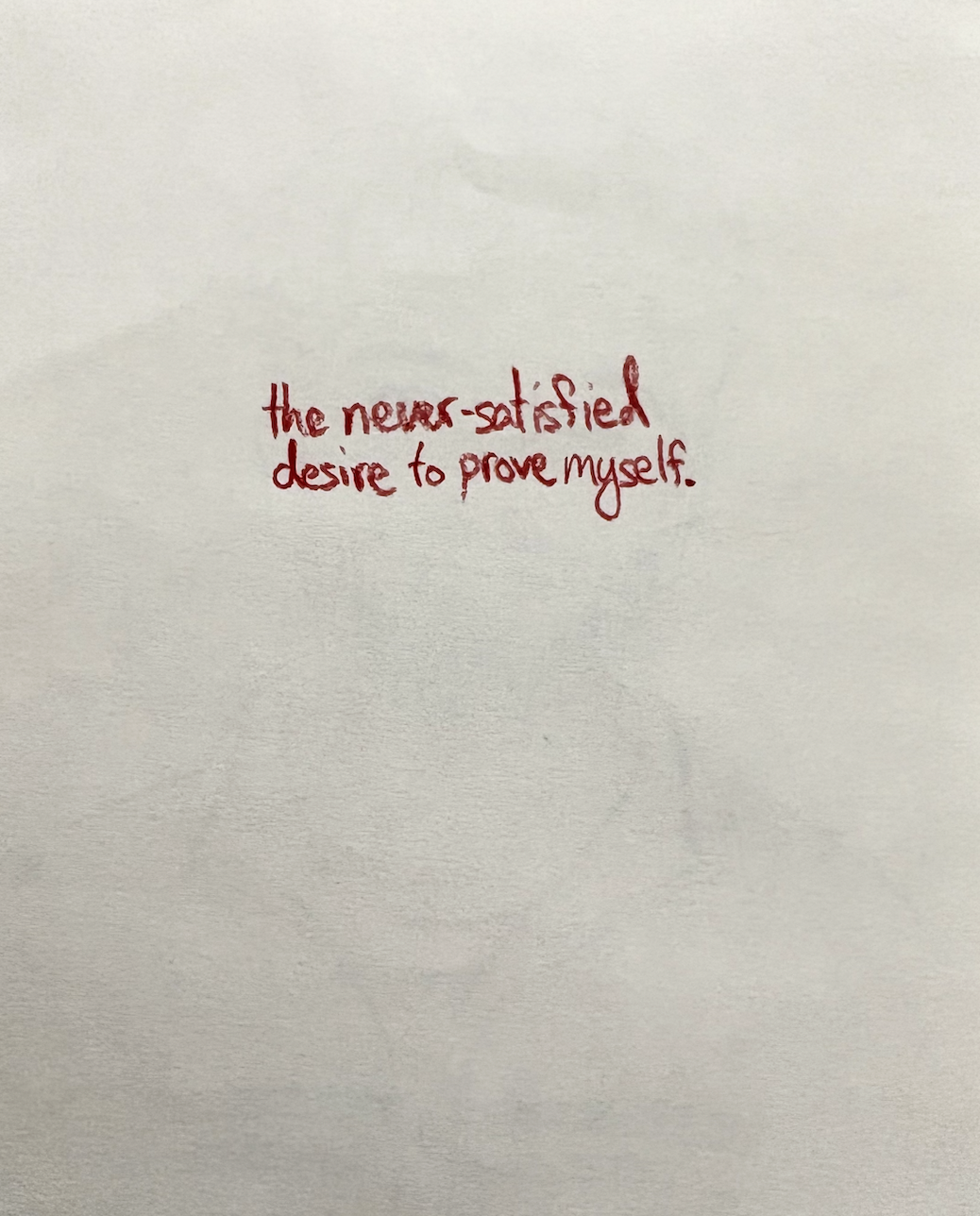
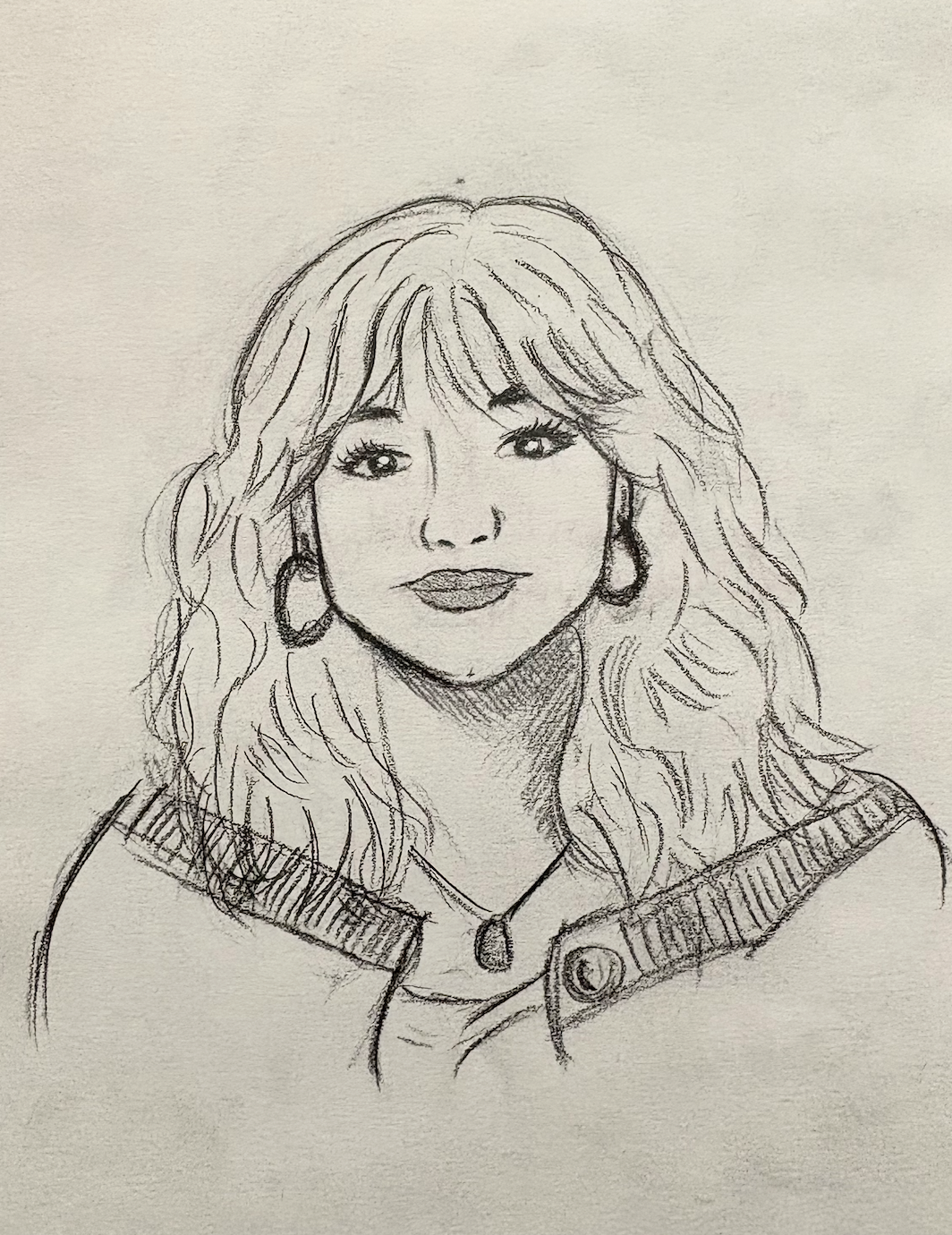
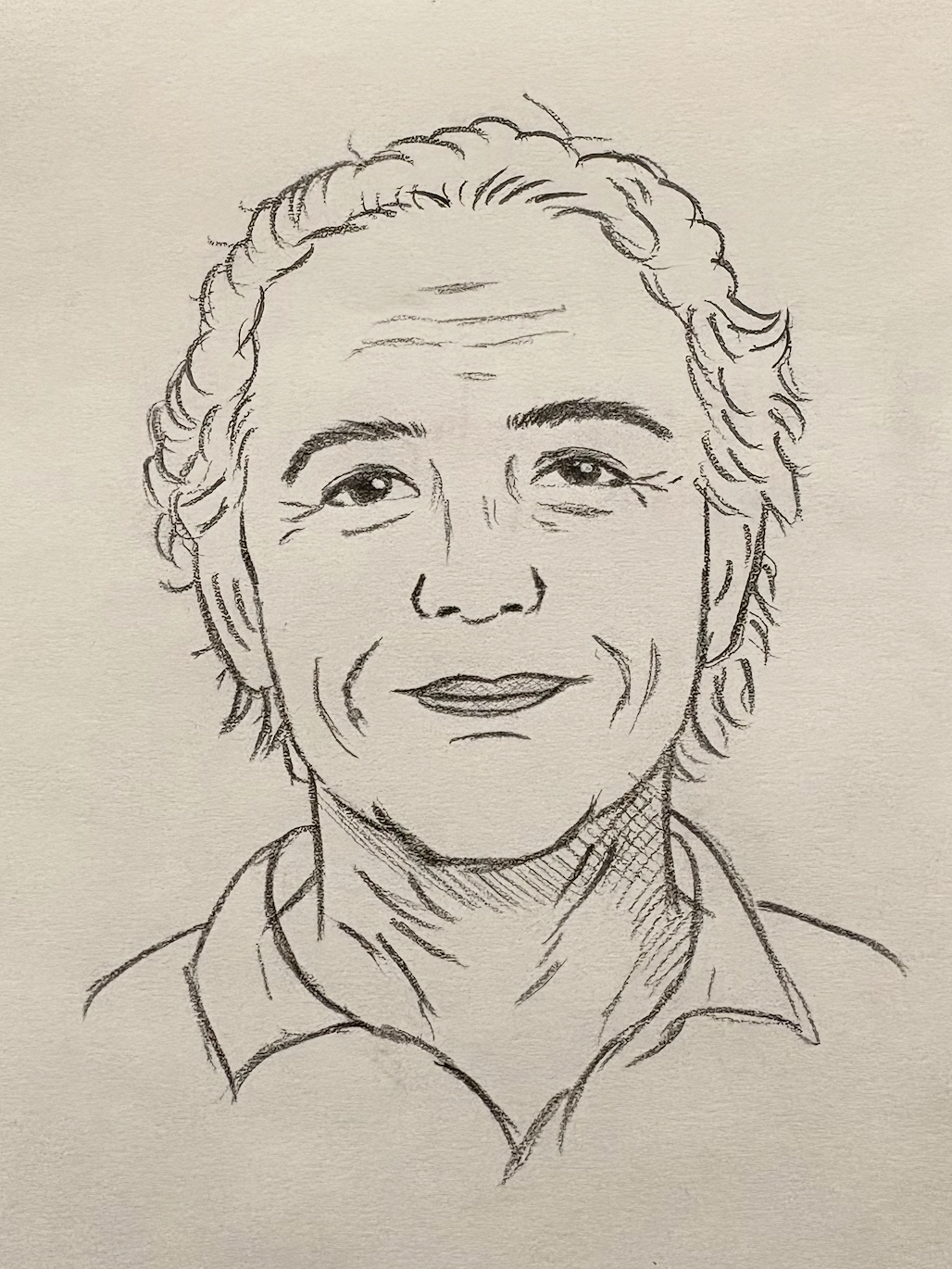
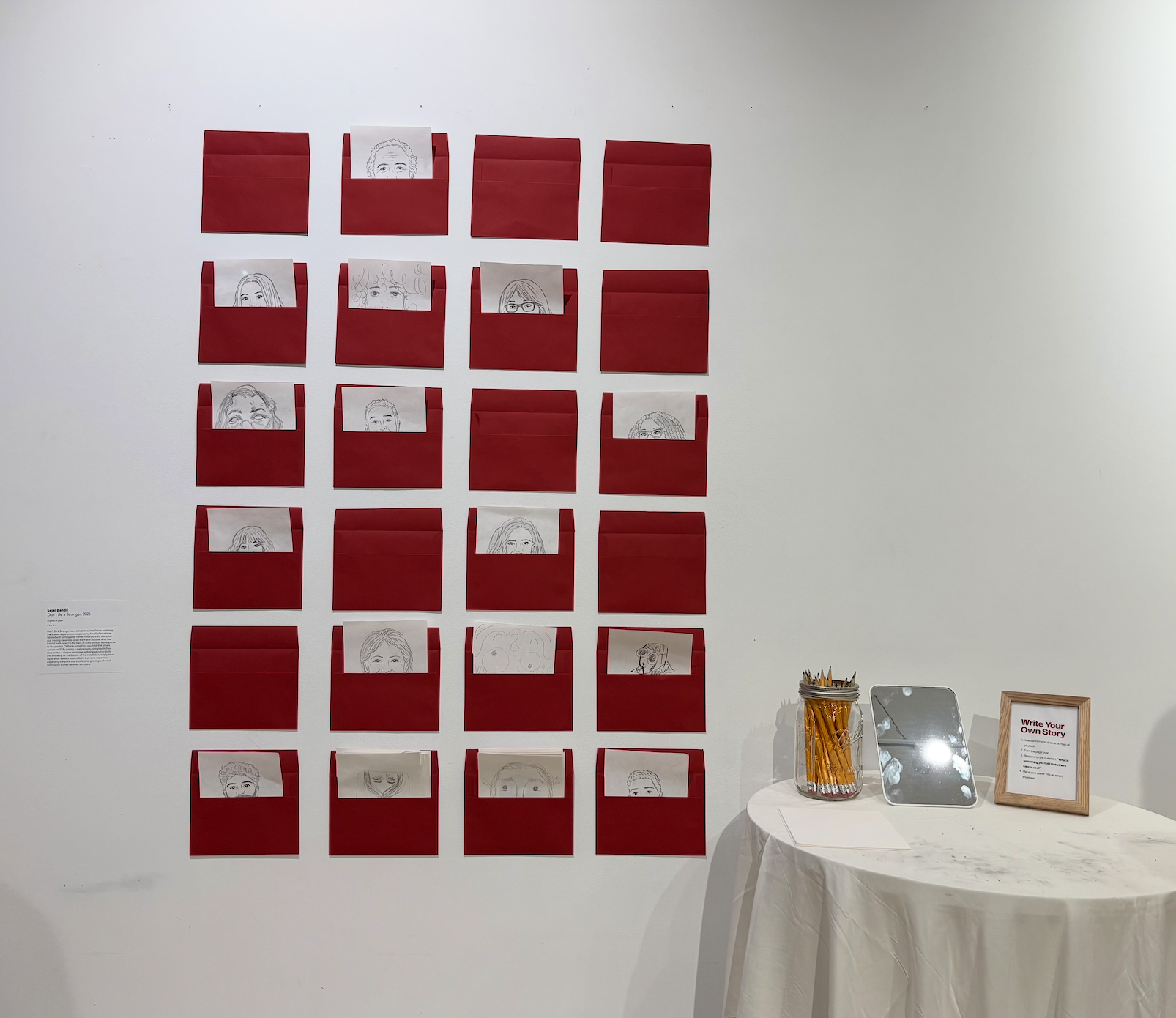
Don’t Be a Stranger is a participatory installation about the gap between outward appearance and inner life. I began by asking people one question: What is something you hold that others cannot see? I collected their responses, drew graphite portraits on paper, one for each person who answered, and placed each portrait inside a red envelope pinned to the wall in a grid. Only the top of each face peeks out. You can see the eyes, sometimes the forehead, sometimes just the hair. The rest of the person, and what they shared, stays tucked inside.
I am interested in the gap between how someone looks and what they are actually living through. The partial portrait gives you just enough to recognize that someone is there, but not enough to know them. Pulling the drawing out and reading what is written on the back becomes an invitation to go further. Looking turns into something more deliberate, closer to care than observation.
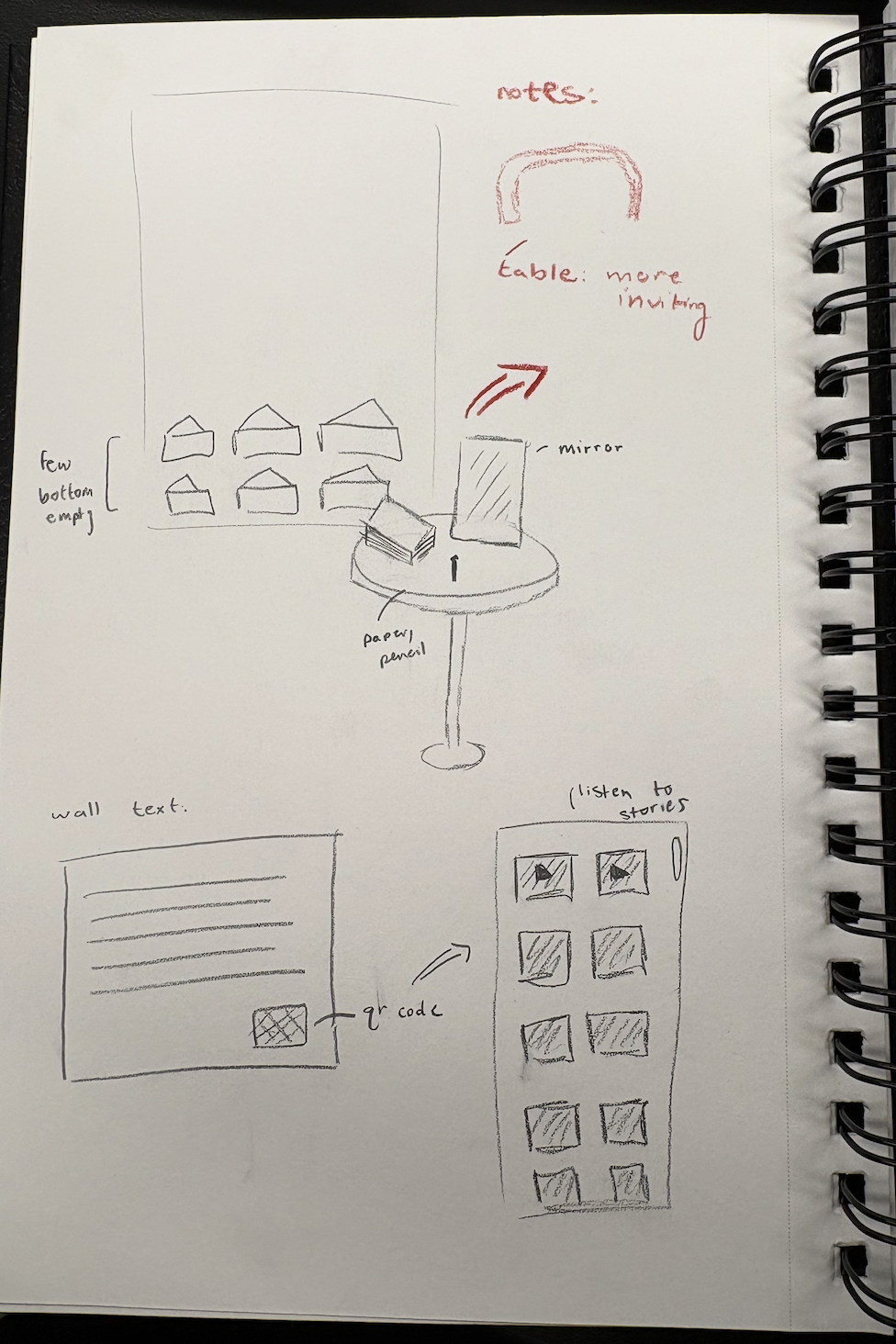
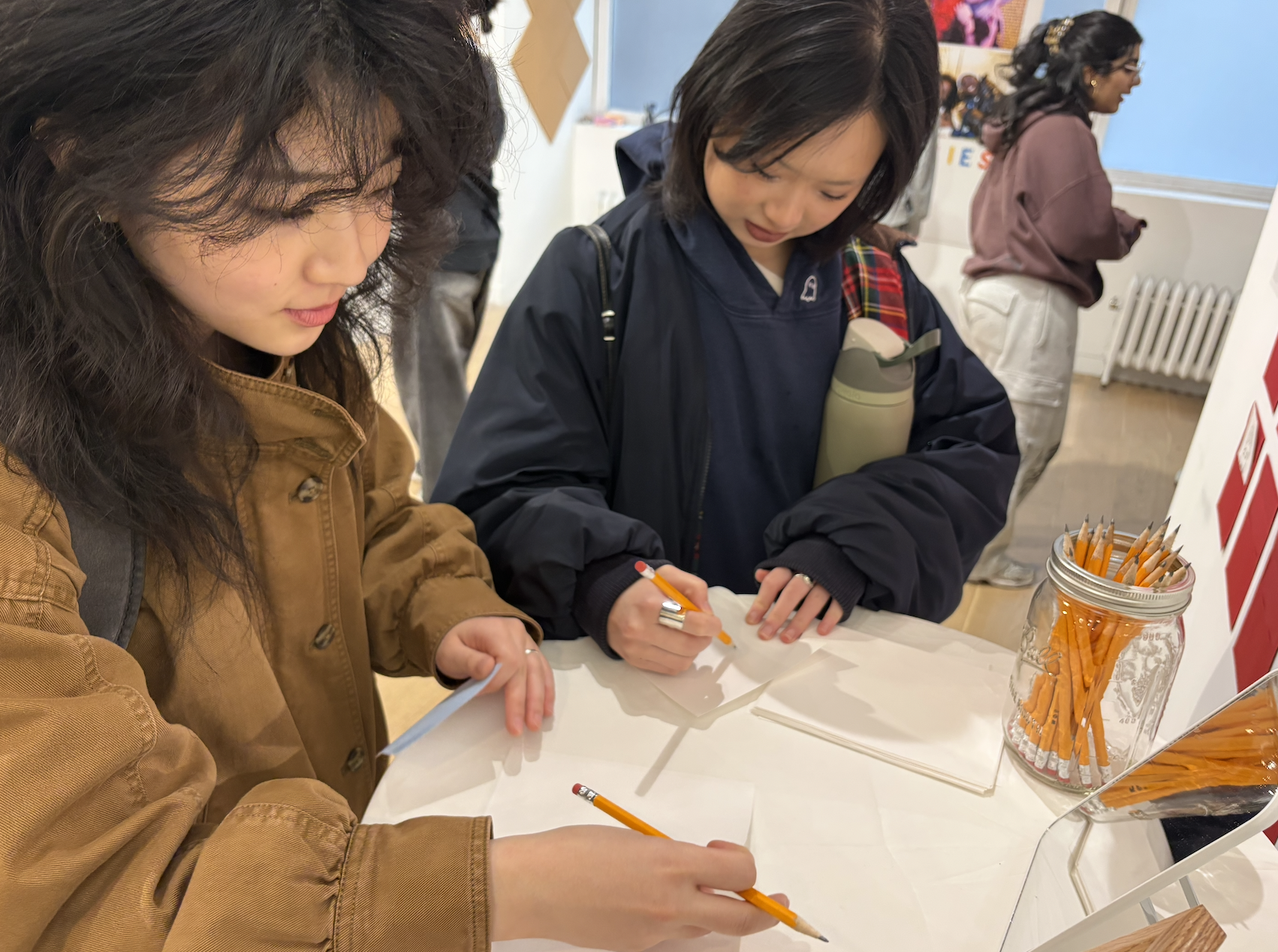
The piece keeps growing every time it is shown. I set up a table with pencils, paper, and a mirror, inviting each new audience to draw themselves and add their own response. Over time, the grid becomes a collective archive of stories shared between strangers, asking whether curiosity can become its own form of empathy.
Class:
Open Call
Tools:
Graphite, Adobe InDesign
Skills:
Illustration, Installation Design, Participatory Design
Inspiration
In a past project, I created a book by interviewing strangers and asking them, “What was your happiest moment?” What began as a simple question became a way to briefly enter someone else’s life and turn a stranger into someone familiar. That experience inspired Don’t Be a Stranger, continuing my interest in intimacy, memory, and the unexpected connections that form through small moments of vulnerability.
Ideation
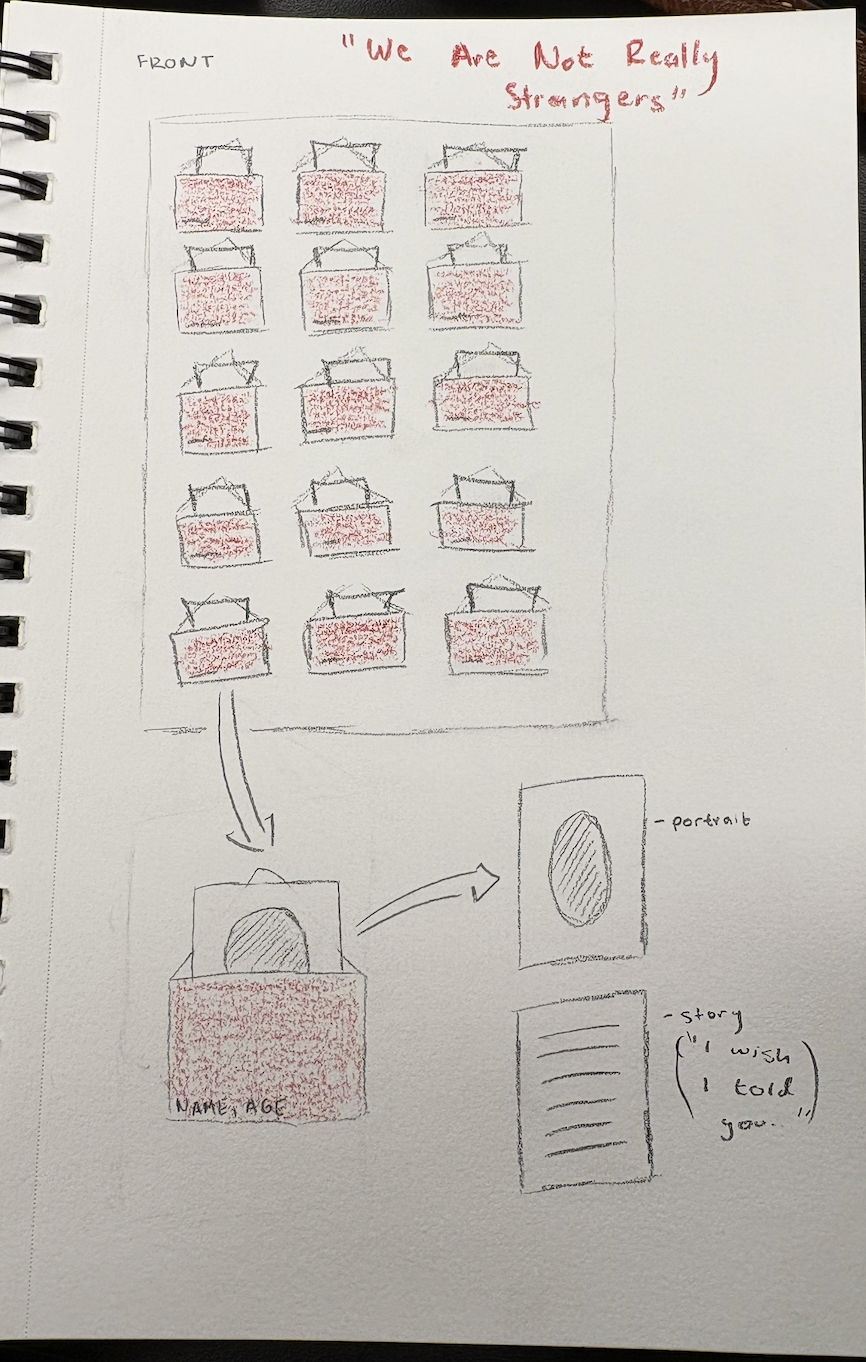
I began the project by sketching ways that portraits, envelopes, and written responses could work together, focusing on how viewers would physically uncover each person’s hidden story.

Installation
Don’t Be a Stranger is a participatory installation exploring the unseen experiences people carry. A wall of envelopes labeled with participants’ names holds portraits that peek out, inviting viewers to open them and discover what lies behind each face. On the back of every portrait is a response to the prompt, “What is something you hold that others cannot see?” By pairing a real person’s portrait with their story invites a deeper encounter with shared vulnerability and empathy. At the bottom of the installation, empty envelopes allow viewers to contribute their own responses, expanding the piece into a collective, growing archive of information shared between strangers.
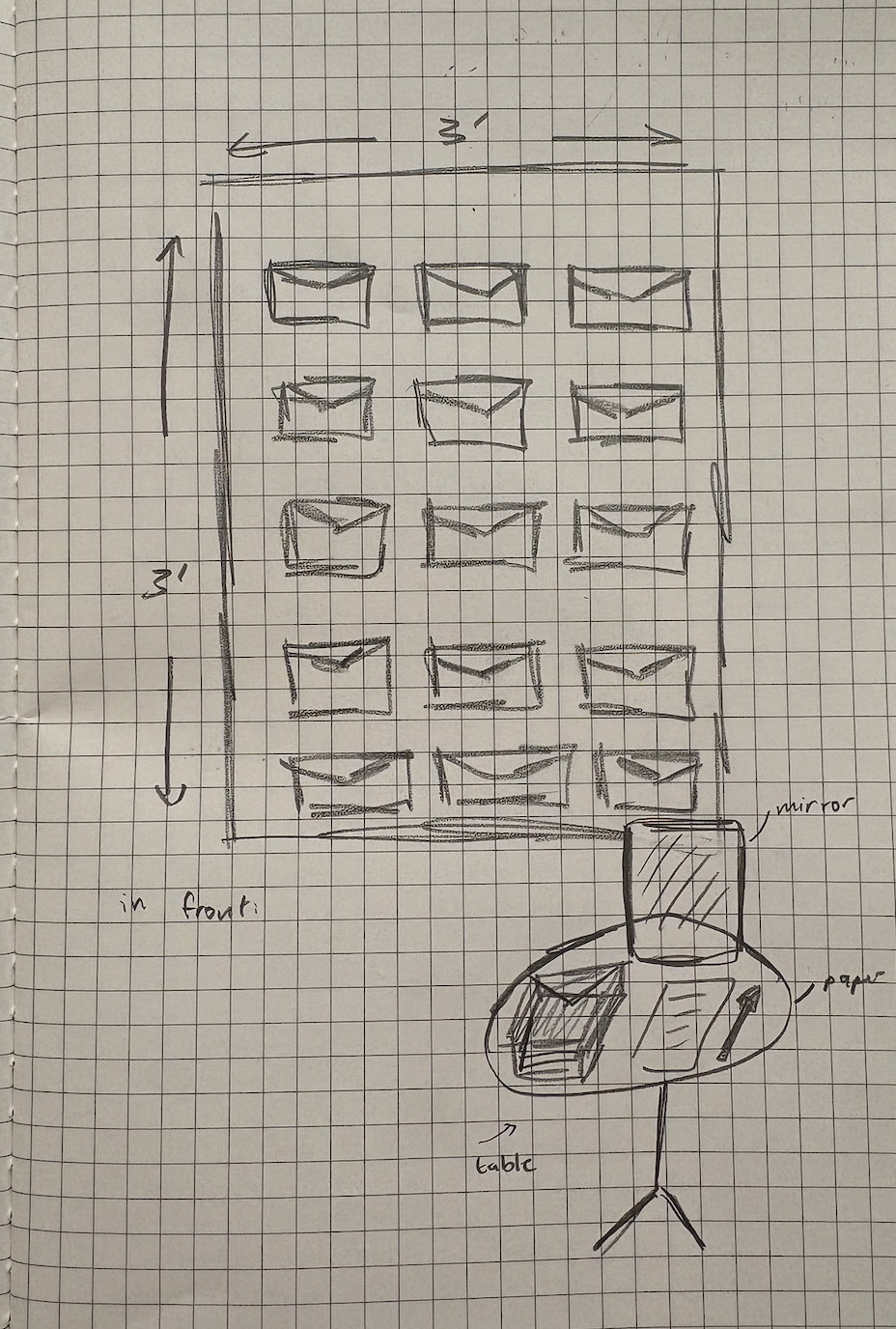
My Sketches
I began by interviewing strangers from different backgrounds, asking each person to share something they carry that others cannot see. Their responses were paired with hand-drawn portraits, with each message written on the back. Click the images below for a glimpse into the stories behind each portrait.





Growing Archive
The installation becomes a growing archive as viewers add their own portraits and written responses over time. Each new contribution expands the piece beyond my original sketches, turning it into a shared collection of hidden thoughts, memories, and experiences.


Strangers’ Stories
Here are some of the audience and stranger-contributed sketches, stories, and responses. Click the images below for a glimpse into the story behind each portrait.


References
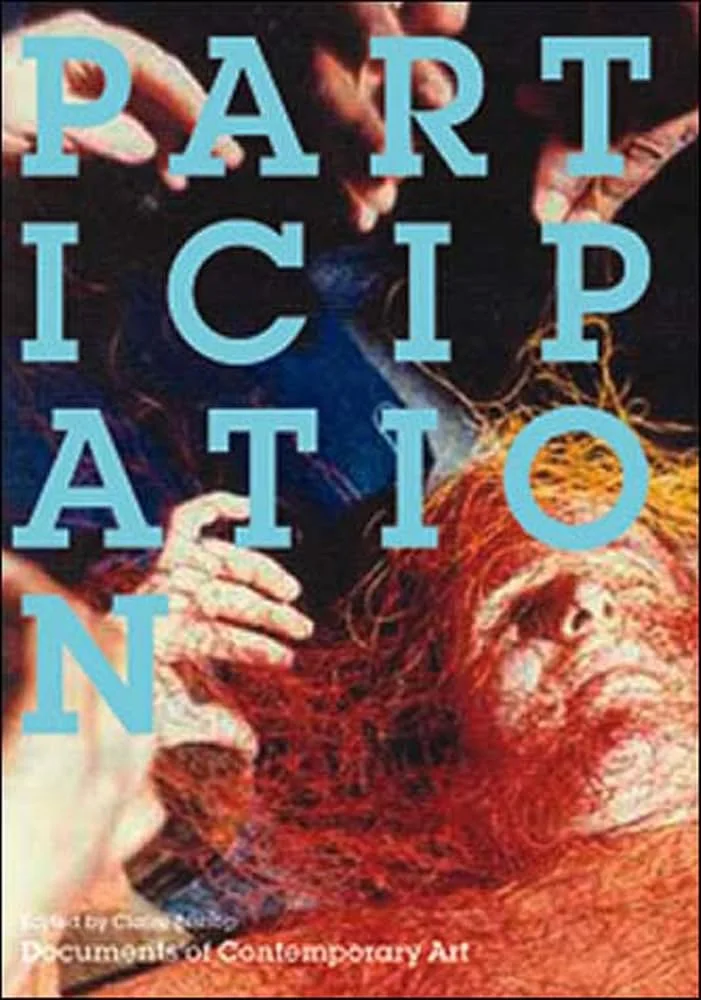
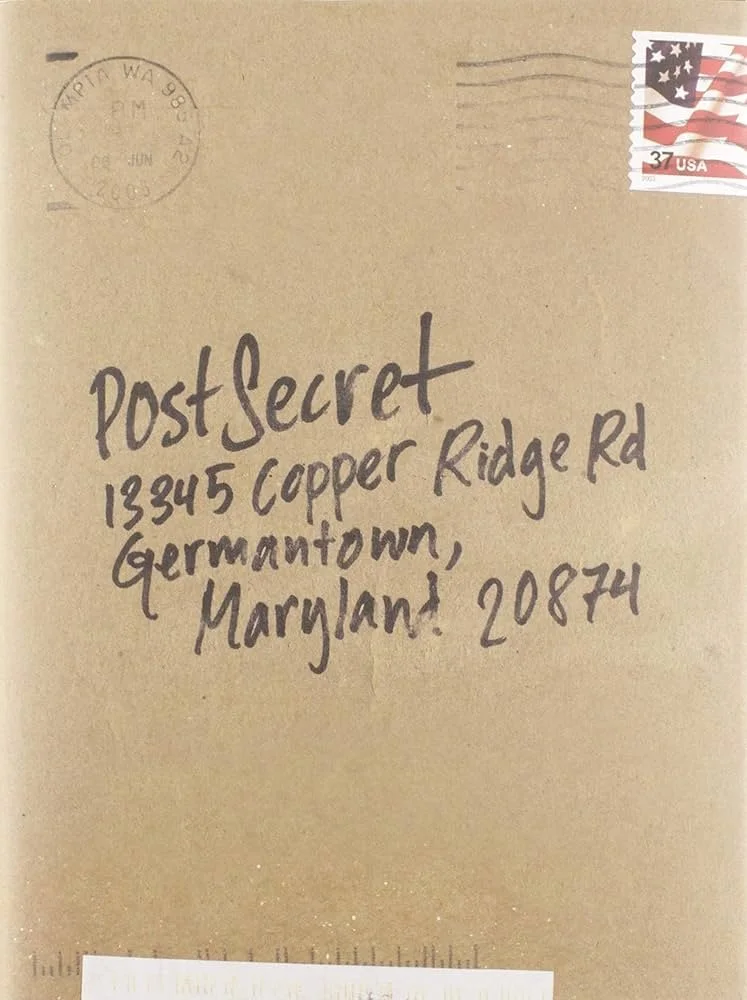
My references focused on participatory art, vulnerability, and anonymous storytelling. Claire Bishop’s Participation helped me think about the viewer as an active part of the work rather than just an observer. Brené Brown’s talk on vulnerability shaped the emotional core of the project, especially the idea that honest sharing can create connection. Frank Warren’s PostSecret served as a key reference for how anonymity can make people feel safe enough to reveal personal stories, turning individual experiences into a shared archive.