iHEARTMEDIA
Context:
iHeartMedia, one of the world’s leading audio platforms, sought to better understand shifting listening behaviors among younger audiences (ages 18–24). The challenge was that traditional radio consumption patterns were changing, and the platform needed to adapt its digital experience to meet evolving user expectations. As a UX Design Intern, I identified opportunities to boost engagement and design improvements that would resonate with Gen Z listeners through end-to-end design, driving both user growth and increased listening hours.
Process:
Working collaboratively with a UX Research Intern and two Product Interns, I conducted user research, surveys, and competitive analysis to gather insights into the motivations and behaviors of younger users. Based on these findings, I created mockups and prototypes to explore design concepts for new features that improved usability, strengthened engagement, and aligned with Gen Z listening preferences. I then conducted usability testing to validate these designs, iterating based on participant feedback to refine user flows and interaction patterns.
Result:
By delivering research-backed design concepts and prototypes, my work provided actionable recommendations for increasing engagement with Gen Z audiences. Leveraging design thinking for a platform with 4.6 million app and web users and 30 million total users, these contributions informed upcoming app updates, helping iHeart strengthen its digital presence and create more intuitive, interactive, and relevant experiences for younger users, ultimately increasing Gen Z usage by 10%
Role:
UX Design Intern
Tools:
Figma, FigJam, UserTesting, Qualtrics
Skills:
UI/UX Design, User Research
Overview
iHeartMedia is a major mass media company spanning radio, podcasts, music streaming, and live events.
However, radio consumption is shifting among younger audiences (18-24), and currently iHeart may not meet their evolving needs. We need to understand the "Young Liam" users to identify opportunities and design targeted features to better engage this group.
Goals & Objectives
Understand the needs and behaviors of Gen Z listeners (18–24)
Explore and test feature concepts that improve personalization, social connection, and retention
Identify gaps between user expectations and iHeart’s current offerings
Recommend strategies to help iHeart better engage and retain younger audiences
Pre-Immersion
We began by conducting a heuristic evaluation of the iHeart app, a pre-immersion survey (25+ participants), and analyzing competitive platforms.
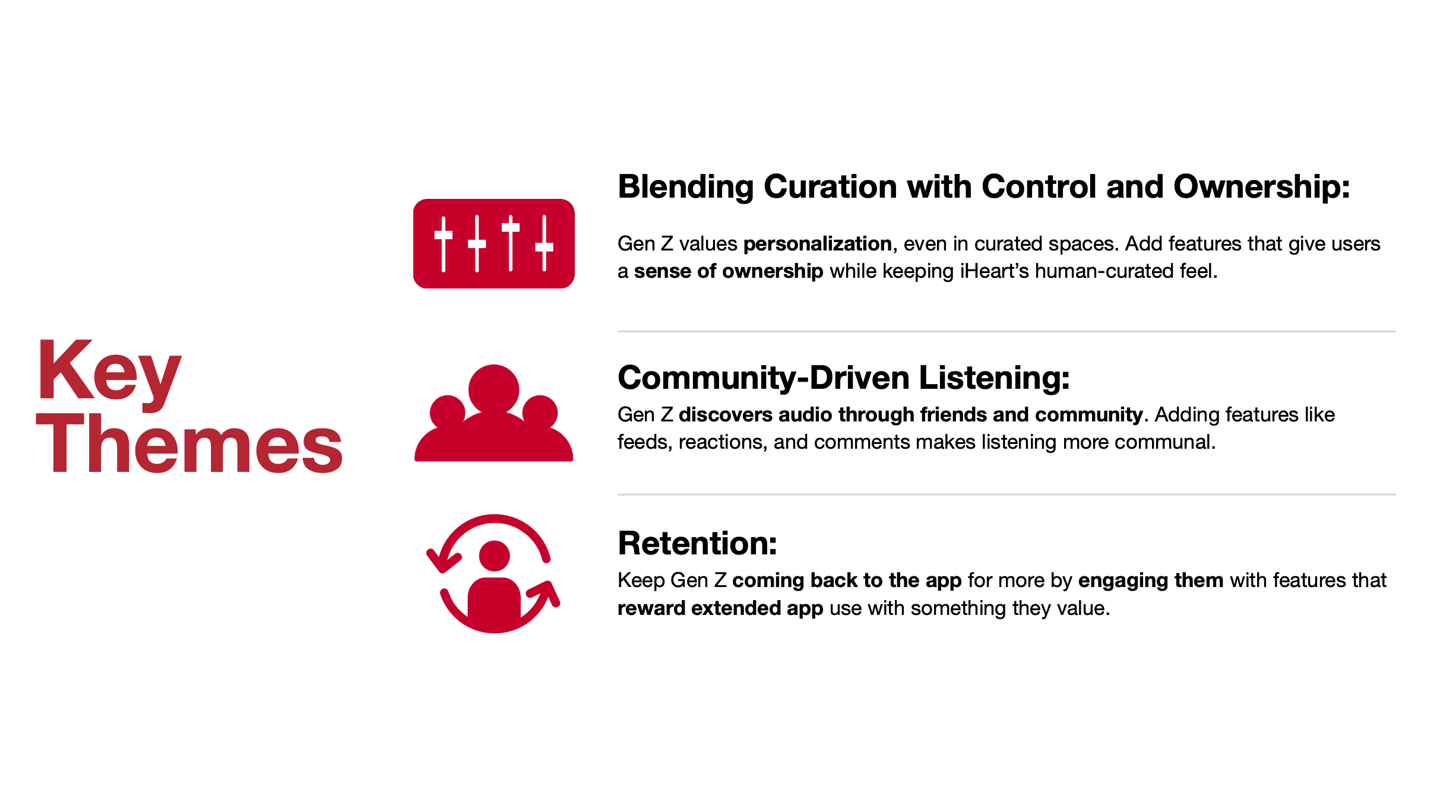
A clear divide exists between what users want and what iHeart provides.
Younger audiences described radio as repetitive and lacking personalization
Gen Z values community-driven discovery, peer validation, and content that feels tailored to their identity
Key Insights:
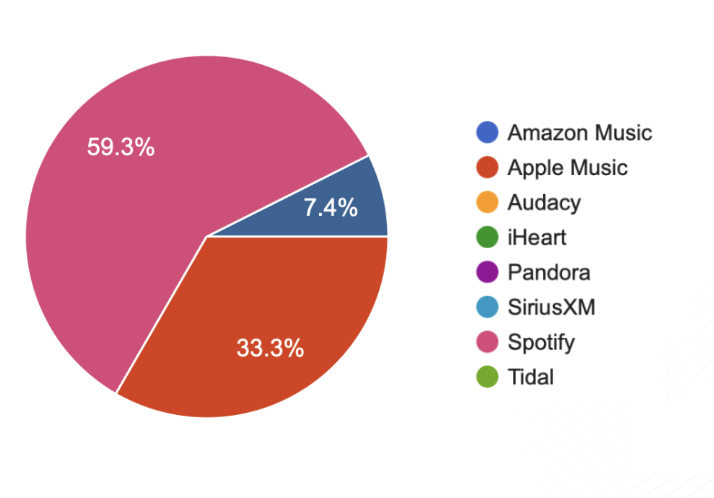
What’s your main listening platform?
Immersion Day
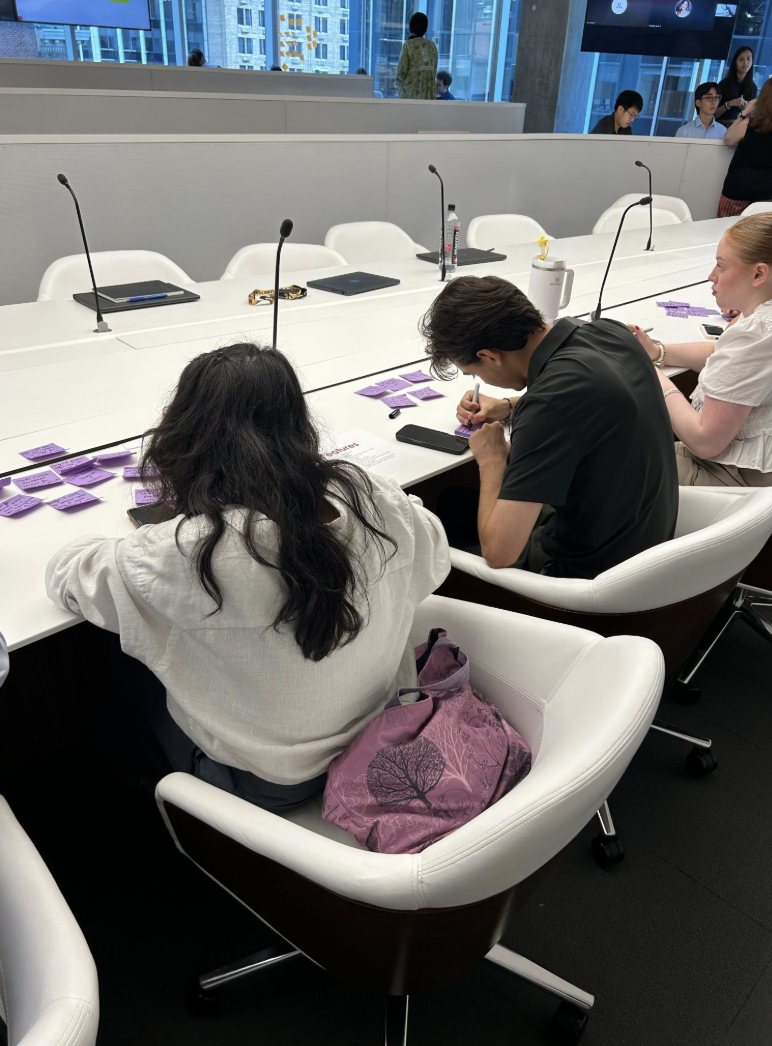
Immersion Day was a collaborative research session with 40 interns from the summer cohort, where we conducted surveys, group brainstorming, and affinity mapping to explore Gen Z listeners’ perceptions of radio and iHeart. The session revealed key gaps in personalization, content variety, and community-driven features, which shaped our design opportunities.


Analyze & Synthesize
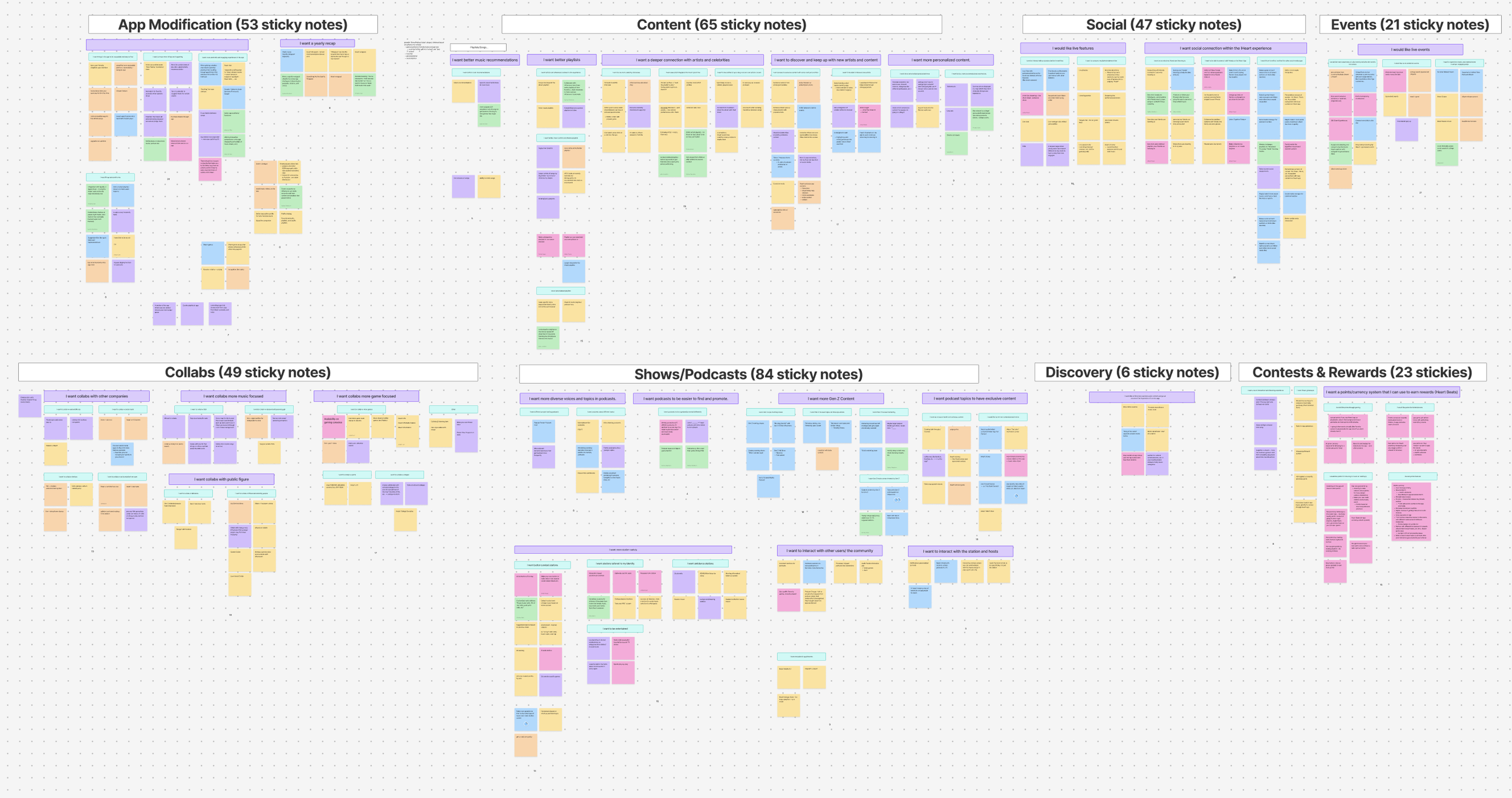
Using FigJam, we created an affinity diagram to organize survey responses and group insights into themes: personalization, social, and content. We then used a ranking spreadsheet to evaluate ideas based on User Value, Feasibility, Strategic Alignment, and Differentiation, allowing us to prioritize the most impactful concepts.
Competitive Analysis
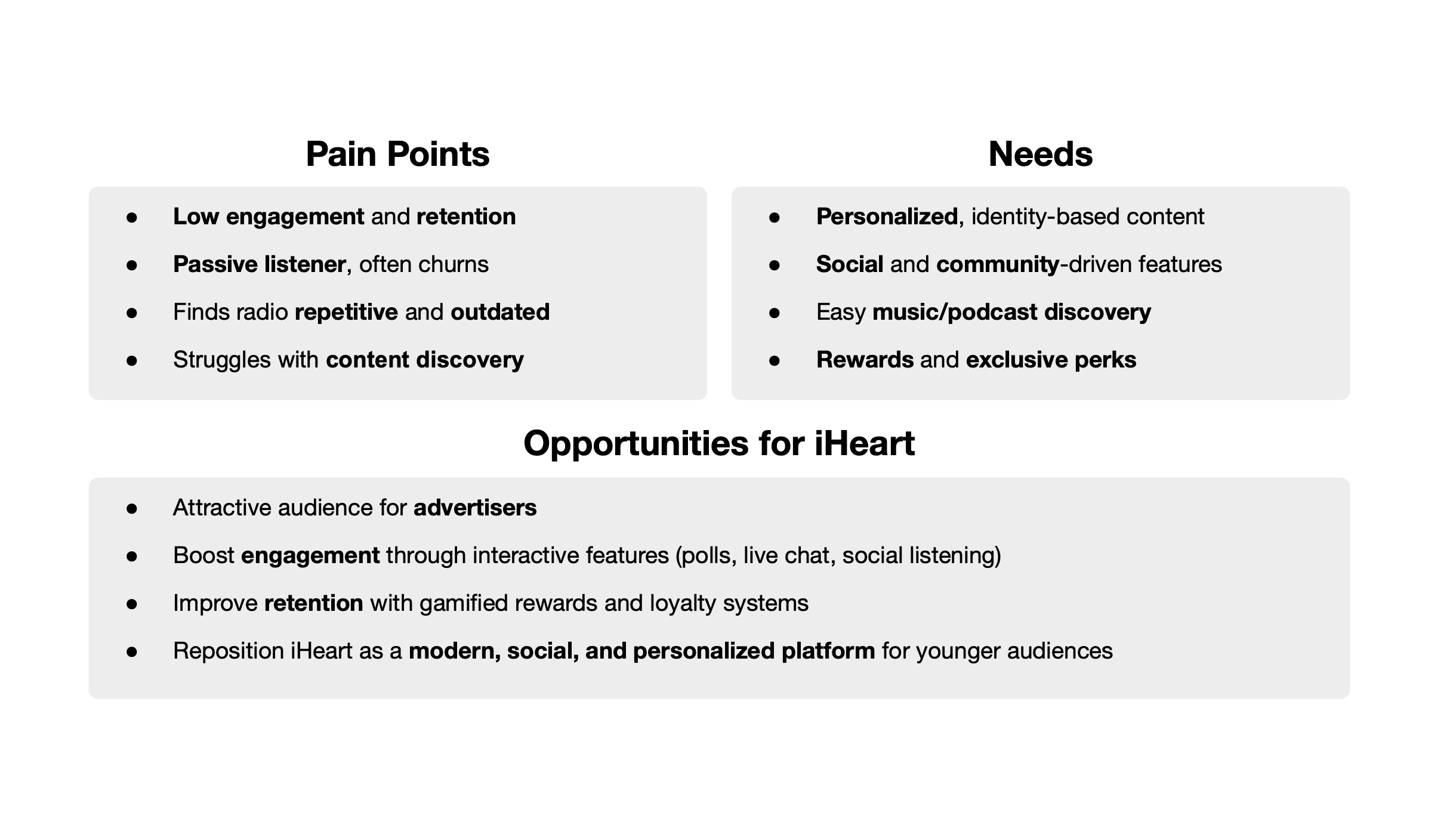
Analyzing competitors revealed valuable insights into industry standards and highlighted opportunities for iHeart to improve personalization, social connection, and retention features.

Key Aspects:
In-app discovery
Navigation
Social
Retention
Common Features:
Enhanced Interest-Based Personalization
Tutorial/Walkthrough
Comment Sections
See What Friends Are Listening To (Live)
Activity Stats and Badges
Live-Sharing Mic / Listener Submissions
Polls in Content
Live Event Awareness (Station Events, Calendar Functionality)
User Persona
Analyzing competitors revealed valuable insights into industry standards and highlighted opportunities for iHeart to improve personalization, social connection, and retention features.

Age: 18–24
Concept Ideation
On Figjam, I began by napkin sketching the top five concepts. Used Copilot and ChatGPT to refined them by feeding sketches and written descriptions (with keywords like iHeart app style) to generate mockups. As a team, we reviewed the designs, using thumbs-up icons and sticky notes to highlight the strongest elements and features to carry forward.
Concept Mockups
On Figma, I transformed these sketches into mockups that reflected iHeart’s people-first values while improving usability and ensuring relevance for Gen Z.
Concept Testing
We tested our concepts with 100+ participants through UserTesting and Qualtrics, focusing on the Young Listener Liam audience. We conducted two separate tests, one with iHeart users and another with non users, to compare engagement and adoption potential.
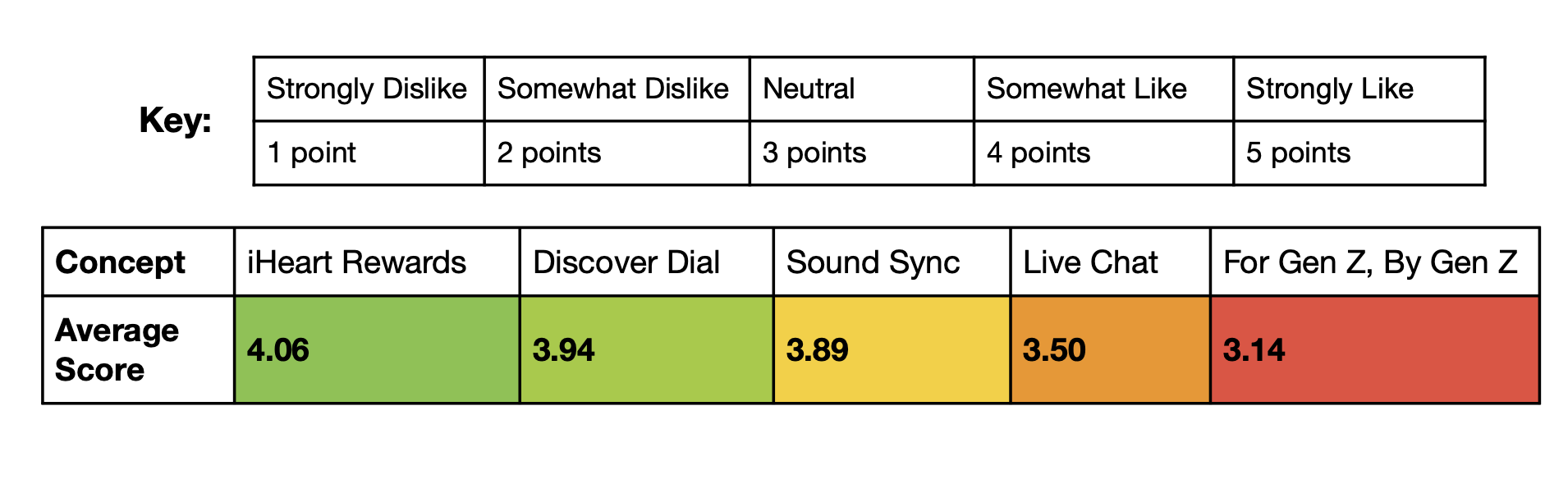
Average Likability Score:
iHeart Rewards
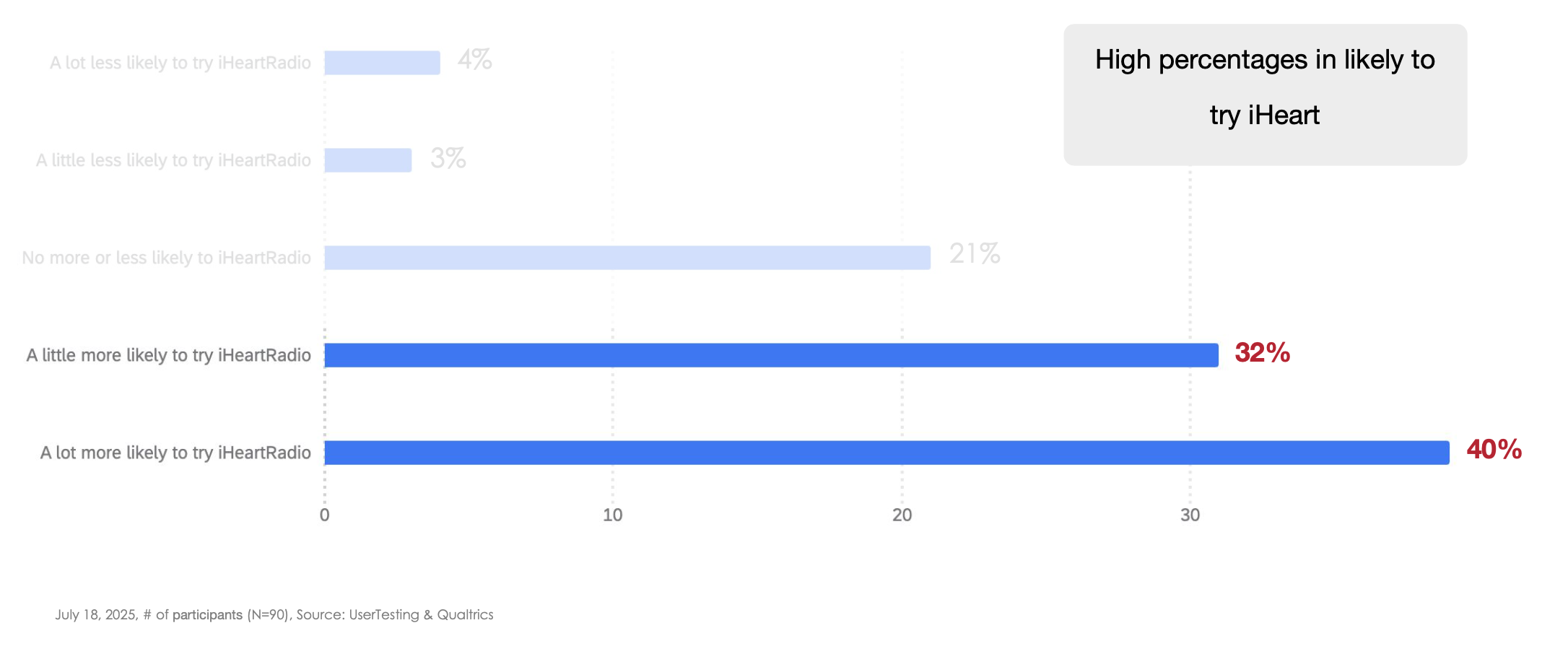
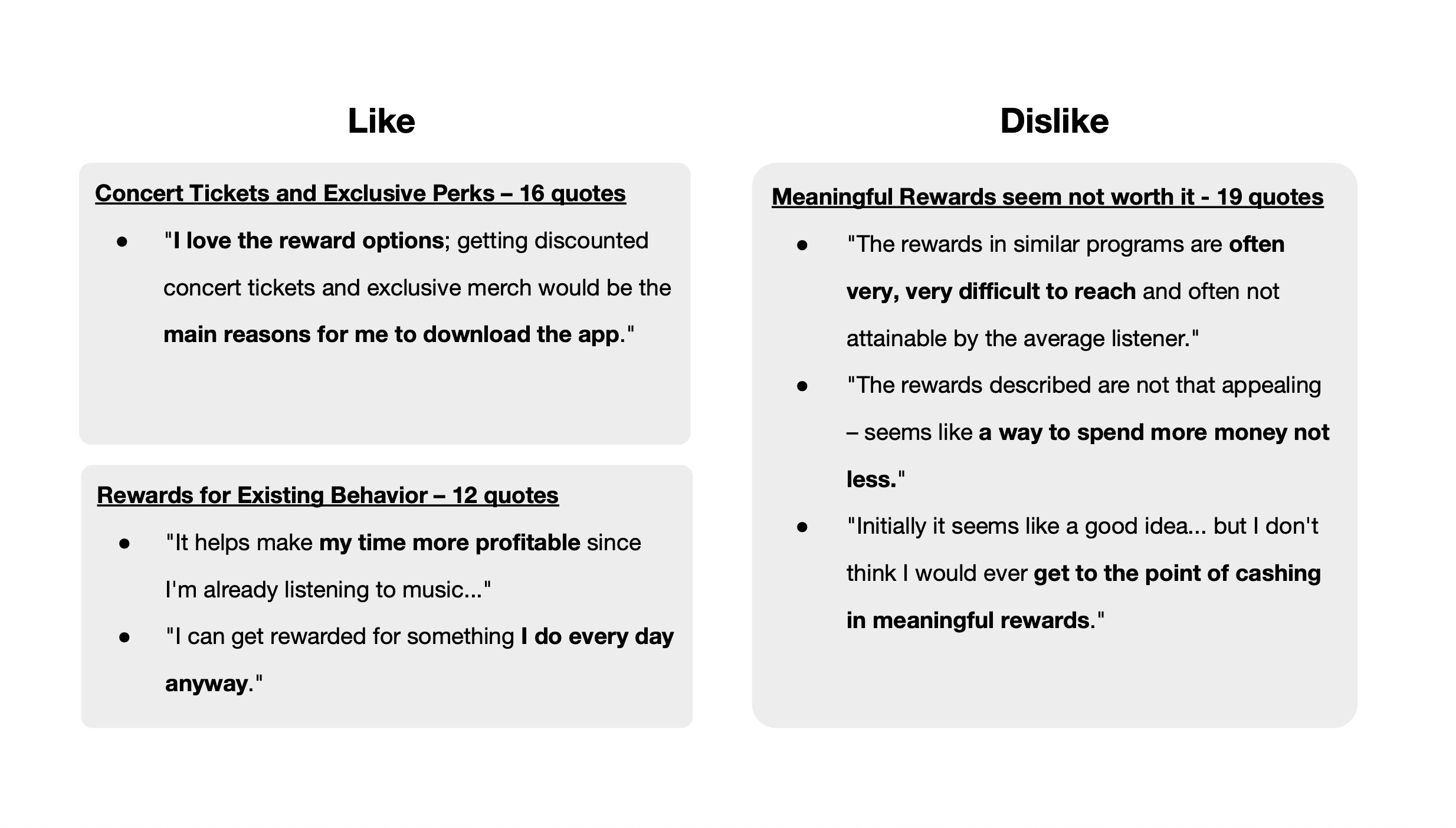
iHeart Rewards received the highest positive feedback. Users valued the reward retention system, tickets and discounts, and being rewarded for existing habits.
User Testing Results:
Just going off the description and the picture, how do you feel about this idea?
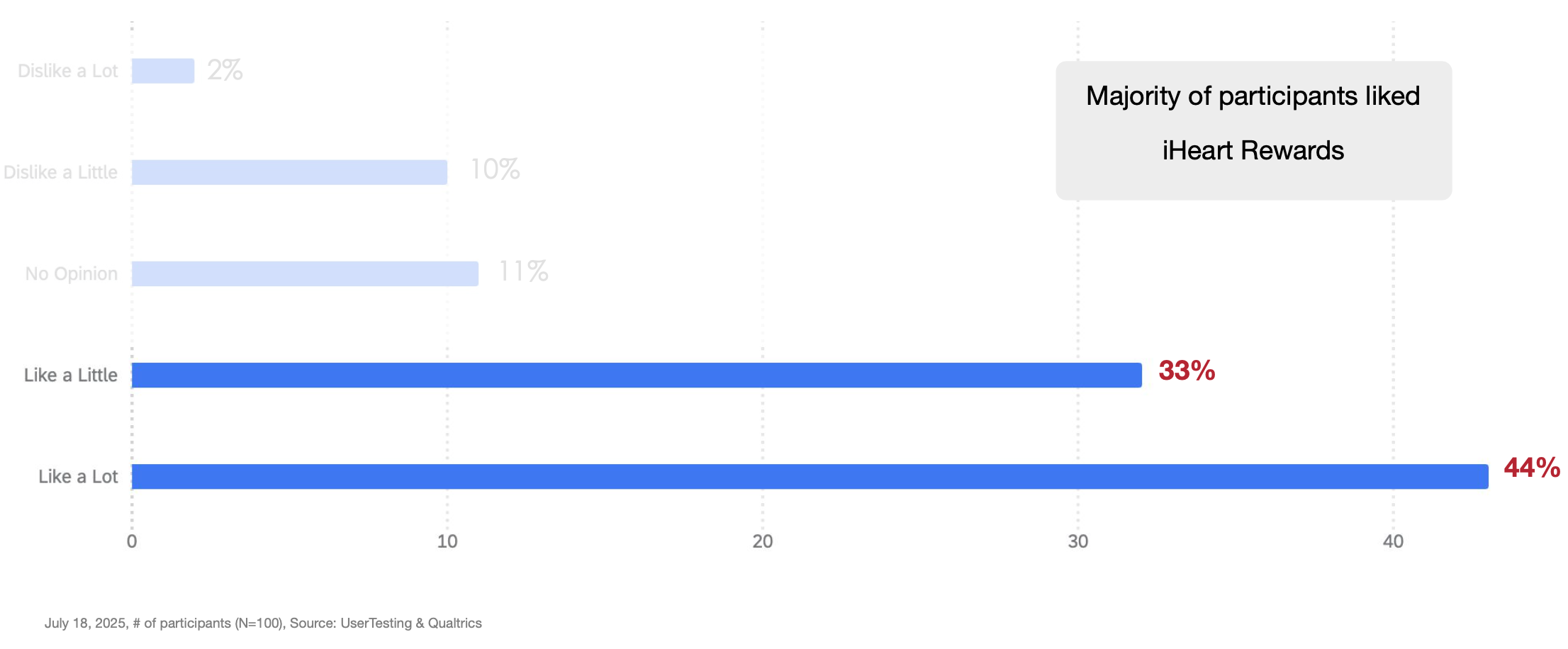
If you knew that the iHeartRadio app had this functionality, would you be…
Stretch Goal
I took the initiative to define the next steps of this concept by creating prototypes and designing my own point system. I outlined how users could earn, track, and redeem points, focusing on a structure that felt rewarding and achievable. This work helped define the logic, usability, and visual flow of the rewards experience. Click here to play the interactive prototype!
Conclusion & Impact
Our research highlighted that personalization, community, and meaningful rewards are essential for engaging Gen Z. By blending iHeart’s strengths in curation and live experiences with interactive, socially-driven features, iHeart can reposition itself as a modern platform for younger listeners. Click here for the final presentation!
Final Takeaways:
Gen Z doesn’t see radio as outdated, but impersonal.
Features that emphasize ownership, connection, and rewards create reasons to stay engaged.
Success lies in balancing iHeart’s people-first perspective with Gen Z’s expectations of digital media.
Above & Beyond
V3 Presets
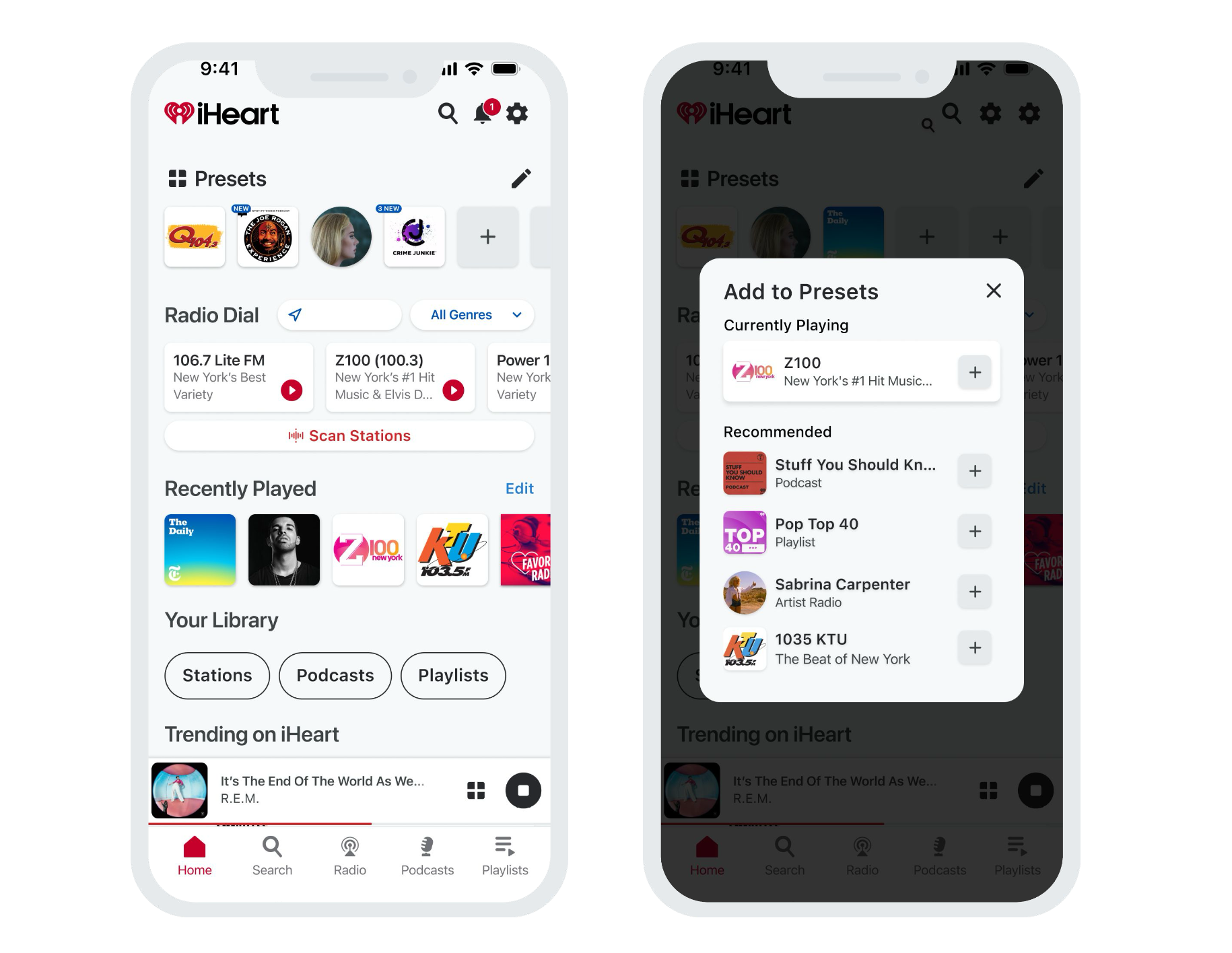
For the upcoming V3 update, I volunteered to create mockups to improve the presets bar experience. I explored multiple design options for both the ‘NEW’ indicator on podcast presets and a long-press interaction for managing presets, then selected the strongest versions to user test. The final concepts included a preset selection menu for empty slots and a ‘NEW’ tag signaling new podcast episodes. In testing with 10 active iHeart users, the ‘NEW’ indicator was rated clear and useful by 90% of participants, while the preset menu aligned strongly with user expectations and helped resolve confusion with the current experience.
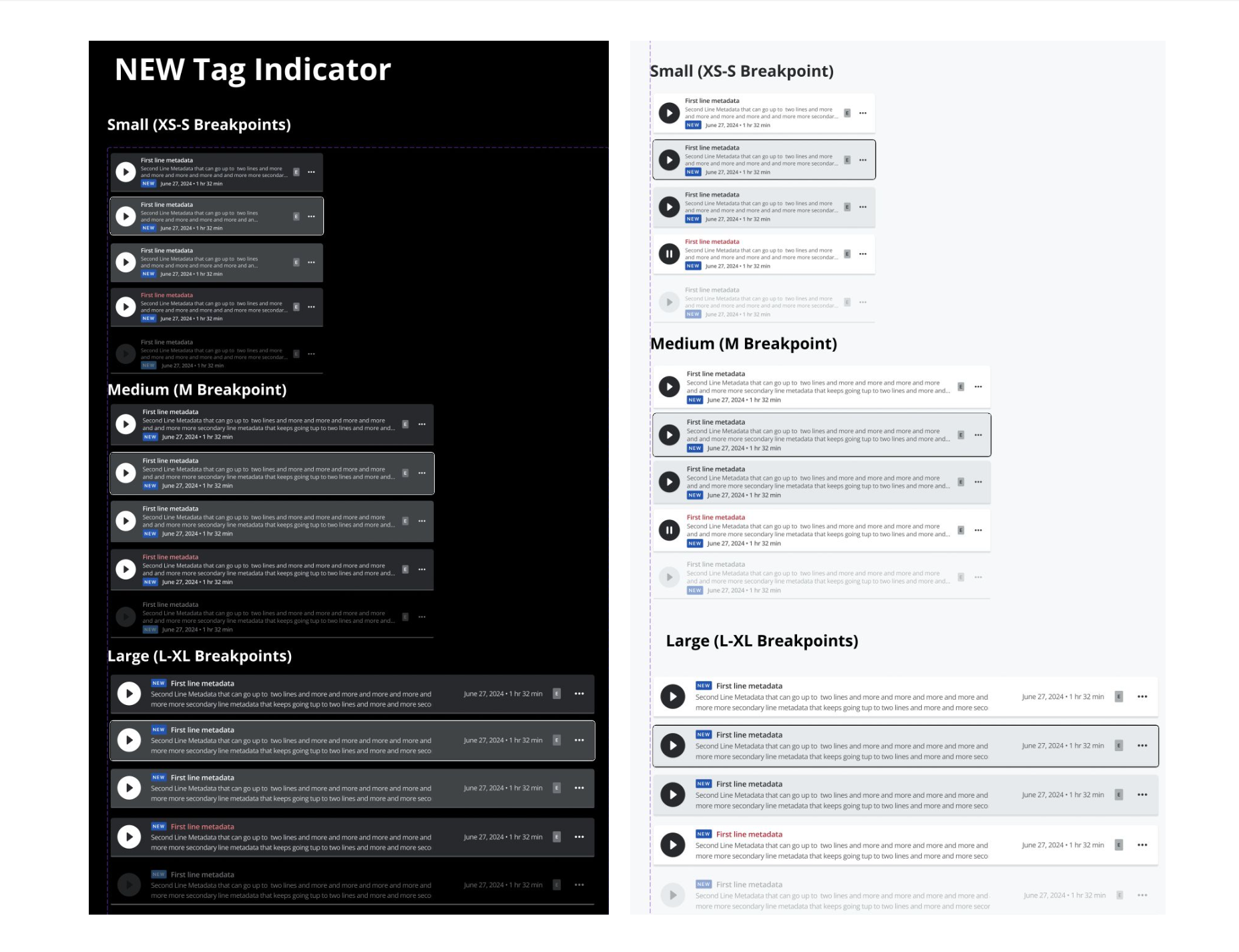
NEW Tag Indicator
I worked on designing and implementing a ‘NEW’ tag for web podcasts, exploring how it would appear across different breakpoints and use cases. This included ensuring consistency in visibility, clarity, and usability, while signaling the availability of new episodes in a way that aligned with user expectations.